The Legend of Tarzan (2016)

Featuring one of Edgar Rice Burroughs’ most iconic and
popular fictional characters, The Legend
of Tarzan (2016) begins in 1890s, eight years after Tarzan (Alexander Skarsgård)
returns to England with his wife Lady Jane (Margot Robbie) to assume his
position as John Clayton III, Lord of Greystoke manor, and member of the House
of Lords. On behalf of Belgium’s King Leopold, emissary Leon Rom (Christoph
Waltz) invites “Africa’s favorite son” to witness the good works Belgium is
performing for the peoples of the Congo Basin, which is incidentally rich in
ivory and minerals, including diamonds.
Pressured by British government officials who expect to establish a lucrative trade partnership with Belgium, Tarzan only reluctantly accepts the invitation when he learns from American presidential diplomatic envoy George Washington Williams (Samuel L. Jackson) that Belgium may be exploiting and imperiling some of the indigenous Congolese people, some of whom are his friends. With his wife American heiress Jane Porter (Margot Robbie) and George Washington Williams at his side, Tarzan travels back to the Congo. So the Legend of Tarzan begins.
Pressured by British government officials who expect to establish a lucrative trade partnership with Belgium, Tarzan only reluctantly accepts the invitation when he learns from American presidential diplomatic envoy George Washington Williams (Samuel L. Jackson) that Belgium may be exploiting and imperiling some of the indigenous Congolese people, some of whom are his friends. With his wife American heiress Jane Porter (Margot Robbie) and George Washington Williams at his side, Tarzan travels back to the Congo. So the Legend of Tarzan begins.
Breathtaking action sequences feature Tarzan with his
reunited companions tree swinging, mountain climbing, and cliff diving. Disturbing flashbacks
provide glimpses into the brutality and beauty of jungle life among the apes, a
life which has claimed both his parents and from which the orphaned Tarzan
emerges as the jungle-streaking "lord of the apes" and a legend. Upon his return to the jungle, Tarzan re-communes with nature and reconnects
with his various human and animal family and friends, including tribal members,
a herd of elephants, a den of adolescent lions, and his ape brother Akut. The reunification
scenes are among the most emotionally satisfying of the movie.
Alexander Skarsgård, though not an athlete as has
been a common practice when casting this role, seems well suited as the taciturn
Tarzan. Christoph Waltz as Leon Rom gives a steely, self-assured performance.
Margot Robbie as Jane is tough, sexy, and smart. Samuel L. Jackson as George
Washington Williams serves as a foil for some of the plot exposition as well as
provides an understated comic relief. Djimon Hounsou as Chief Mbonga gives a
dignified and sympathetic portrayal of the emotionally wounded tribal leader.
Despite an epic cast of extras and though the movie downplays
the “great white hope” presentation of Africa’s favorite son as envisioned in
Burroughs’ novels of this character, The
Legend of Tarzan faithfully reproduce its colonialistic-period. Unfortunately,
in a summer of movie releases which includes modernistic, hyperkinetic action
features like Captain America: Civil War,
Independence Day 2, Suicide Squad, Ghost Busters, and Star Trek,
some moviegoers might find the deliberate pacing and the colonialistic tone of The Legend of Tarzan too slow and outdated.
But for a tree swinging good throwback action adventure movie, this movie critic
gives director David Yates' The Legend of Tarzan 3.5 out of
5 stars.
About
the Reviewer
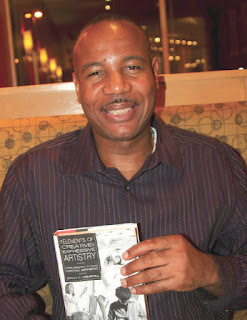
Brian K. Hemphill (bkhemphill@expressiveartistry.net) is an author, artist, blogger, teacher, and public speaker. He has explored a number of artistic disciplines, including fiction and poetry writing, visual art, drama, dance, and music. He now offers consultations, one-one-one coaching sessions, workshop presentations, and book talks about the factors that foster artistic creativity and expressiveness. His book is entitled The Elements of Creative and Expressive Artistry: A Philosophy for Creating Everything Artistic. Hemphill lives in the New York metropolitan area.
About the Book
The Elements of Creative and Expressive Artistry: A Philosophy for Creating Everything Artistic (www.elementsofartistry.net) is an all-artist guide which identifies the nine root elements common to all artistic fields and explains their significance in creating expressive art. This book is for adult and young adult performers, writers, and visual artists. The Elements of Creative and Expressive Artistry uses hundreds of relevant examples, citations, and quotations from prominent art professionals, philosophers, scientists, past and present, to support over 40 chapters. Through warm and insightful narrative, Hemphill offers advice from painters, sculptors, dancers, choreographers, actors, film directors, musicians, teachers, psychologists, scientists, philosophers, and critics, writing on all forms of art, including visual arts, literary arts, dramatic arts, musical arts, dance arts, and hybrid art forms. For advanced artists, critics, and teachers looking to understand artistic depth and nuance, The Elements of Creative and Expressive Artistry presents 36 additional elements branching from the nine root elements and suggests other avenues for artistic investigation and development. Although mainly written for the artist and arts professional, the non-artist who has a general love for art will also gain a deeper understanding and appreciation of art.
Brian K. Hemphill (bkhemphill@expressiveartistry.net) is an author, artist, blogger, teacher, and public speaker. He has explored a number of artistic disciplines, including fiction and poetry writing, visual art, drama, dance, and music. He now offers consultations, one-one-one coaching sessions, workshop presentations, and book talks about the factors that foster artistic creativity and expressiveness. His book is entitled The Elements of Creative and Expressive Artistry: A Philosophy for Creating Everything Artistic. Hemphill lives in the New York metropolitan area.
About the Book
The Elements of Creative and Expressive Artistry: A Philosophy for Creating Everything Artistic (www.elementsofartistry.net) is an all-artist guide which identifies the nine root elements common to all artistic fields and explains their significance in creating expressive art. This book is for adult and young adult performers, writers, and visual artists. The Elements of Creative and Expressive Artistry uses hundreds of relevant examples, citations, and quotations from prominent art professionals, philosophers, scientists, past and present, to support over 40 chapters. Through warm and insightful narrative, Hemphill offers advice from painters, sculptors, dancers, choreographers, actors, film directors, musicians, teachers, psychologists, scientists, philosophers, and critics, writing on all forms of art, including visual arts, literary arts, dramatic arts, musical arts, dance arts, and hybrid art forms. For advanced artists, critics, and teachers looking to understand artistic depth and nuance, The Elements of Creative and Expressive Artistry presents 36 additional elements branching from the nine root elements and suggests other avenues for artistic investigation and development. Although mainly written for the artist and arts professional, the non-artist who has a general love for art will also gain a deeper understanding and appreciation of art.

Comments
Post a Comment