X-Men: Apocalypse: Marvel Studios' Apocalyptic Vision Falls Short

X-Men: Apocalypse (2016),
directed by film director Bryan Singer, completes the prequel trilogy that
includes X-Men: First Class (2011) and
X-Men: Days of Future Past (2014). James
McAvoy returns as the affable, young Professor Charles Xavier, the X-Men’s
philosophical patriarch and leader. This time an ad hoc splinter crew of the
X-Men must battle an elite band of super mutants lead by ancient mutant En
Sabah Nur, known more popularly in Marvel comic book lore as Apocalypse. Once
deified as the god Ra by the ancient Egyptians, and now reanimated, En Sabah Nur facilitates a
worldwide apocalypse to purge the earth of the weak.
Grounding the movie, Michael Fassbender as Erik Lehnsherr
aka Magneto displays the necessary emotional range and depth symbolizing the deep
suffering of personal loss experienced by mutant and humans alike while debate
rages amidst the devastation and destruction as to whether mutants and humans
can peacefully and cooperatively co-exist. James McAvoy aka Profession X delivers a solid
performance. Jennifer Lawrence, though an instrumental lead
character of the storyline as Raven/Mystique, lacks energy and emotional intent
ultimately dampening the urgency of many of the scenes in which she appears. Oscar
Isaac as En Sabah Nur (Apocalypse) gives a layered performance with gravitas.
As for other cast members, Evan Peters provides delight as
Peter Maximoff aka Quicksilver. Kodi Smit-McPhee as Kurt Wagner aka Nightcrawler,
though understated in his performance, is appealing. Jean Grey, portrayed adroitly
by Sophie Turner, needed stronger script development to justify the pivotal
role she plays in the resolution of the storyline. Hugh Jackman’s ferociously
delicious cameo as Wolverine made this movie goer hungry for more.
Nicholas Hoult (Hank McCoy/Beast), Tye Sheridan (Scott
Summers/Cyclops), Ben Hardy (Angel), Alexandra Shipp (Ororo Munroe/Storm),
Lucas Till (Alex Summers/Havok), Lana Condor (Jubilee), Rose Byrne (Moira
Mactaggert), Olivia Munn (Psylocke) and
Josh Helman as Col. William Stryker round out the central support cast.
X-Men: Apocalypse
has great combat scenes and cataclysmic action, great sets and locales, great
makeup, great costuming, and great special effects. Moreover, the movie smartly
defines these mutant characters and establishes their great powers and
abilities. Unfortunately, all this greatness fails to deliver a great movie.
Despite a run time of 144 minutes, poor pacing and a premature climax doom the movie.
A two-part installment allowing the arc of the climax to more fully mature
would have produced a more satisfying story resolution. Certainly the story
material is substantial enough.
Undoubtedly, fans of the franchise will find themselves
divided as to the success of the movie. Even without the ambitious storyline
being fully realized, X-Men: Apocalypse
directed by Bryan Singer, provides an impressively frightening glimpse into an alternate
new world order. For its save-the-world heroics, X-Men: Apocalypse earns 3 out of 5 stars.
About the Reviewer
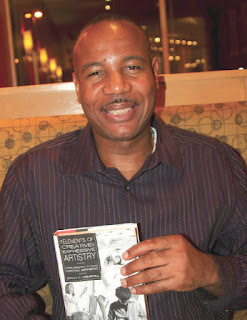
Brian K. Hemphill (bkhemphill@expressiveartistry.net) is an author, artist, blogger, teacher, and public speaker. He has explored a number of artistic disciplines, including fiction and poetry writing, visual art, drama, dance, and music. He now offers consultations, one-one-one coaching sessions, workshop presentations, and book talks about the factors that foster artistic creativity and expressiveness. His book is entitled The Elements of Creative and Expressive Artistry: A Philosophy for Creating Everything Artistic. Hemphill lives in the New York metropolitan area.
About the Book
The Elements of Creative and Expressive Artistry: A Philosophy for Creating Everything Artistic (www.elementsofartistry.net) is an all-artist guide which identifies the nine root elements common to all artistic fields and explains their significance in creating expressive art. This book is for adult and young adult performers, writers, and visual artists. The Elements of Creative and Expressive Artistry uses hundreds of relevant examples, citations, and quotations from prominent art professionals, philosophers, scientists, past and present, to support over 40 chapters. Through warm and insightful narrative, Hemphill offers advice from painters, sculptors, dancers, choreographers, actors, film directors, musicians, teachers, psychologists, scientists, philosophers, and critics, writing on all forms of art, including visual arts, literary arts, dramatic arts, musical arts, dance arts, and hybrid art forms. For advanced artists, critics, and teachers looking to understand artistic depth and nuance, The Elements of Creative and Expressive Artistry presents 36 additional elements branching from the nine root elements and suggests other avenues for artistic investigation and development. Although mainly written for the artist and arts professional, the non-artist who has a general love for art will also gain a deeper understanding and appreciation of art.
Brian K. Hemphill (bkhemphill@expressiveartistry.net) is an author, artist, blogger, teacher, and public speaker. He has explored a number of artistic disciplines, including fiction and poetry writing, visual art, drama, dance, and music. He now offers consultations, one-one-one coaching sessions, workshop presentations, and book talks about the factors that foster artistic creativity and expressiveness. His book is entitled The Elements of Creative and Expressive Artistry: A Philosophy for Creating Everything Artistic. Hemphill lives in the New York metropolitan area.
About the Book
The Elements of Creative and Expressive Artistry: A Philosophy for Creating Everything Artistic (www.elementsofartistry.net) is an all-artist guide which identifies the nine root elements common to all artistic fields and explains their significance in creating expressive art. This book is for adult and young adult performers, writers, and visual artists. The Elements of Creative and Expressive Artistry uses hundreds of relevant examples, citations, and quotations from prominent art professionals, philosophers, scientists, past and present, to support over 40 chapters. Through warm and insightful narrative, Hemphill offers advice from painters, sculptors, dancers, choreographers, actors, film directors, musicians, teachers, psychologists, scientists, philosophers, and critics, writing on all forms of art, including visual arts, literary arts, dramatic arts, musical arts, dance arts, and hybrid art forms. For advanced artists, critics, and teachers looking to understand artistic depth and nuance, The Elements of Creative and Expressive Artistry presents 36 additional elements branching from the nine root elements and suggests other avenues for artistic investigation and development. Although mainly written for the artist and arts professional, the non-artist who has a general love for art will also gain a deeper understanding and appreciation of art.

Comments
Post a Comment