West Side Story: Still Compelling Five Decades Later

West Side Story is a bold reinterpretation of a beloved classic musical based on a conception of the late, great Jerome Robbins who directed and choreographed the original 1950s production. With music by Leornard Bernstein and lyrics by Stephen Sondheim, this bold, new production is directed by Arthur Laurents, who authored the original book of the play.
The fateful story of youthful love modeled on Romeo and Juliet features Tony, a white teenager from a working class family, and Maria, a Puerto Rican immigrant who, only recently arrives to New York City. The two meet at a dance and fall instantly in love. Ultimately, however, their love is torn apart amid conflicting loyalties and the boiling tensions between the White and Puerto Rican gang members battling for turf in their New York City neighborhood.
Tony is played with the right degree of angst by Matthew Hydzik, and Broadway newcomer Sarah Amengaul, who, once she found her theatrical stride, portrayed an optimistically cheerful and sweet Maria. Natalie Cortez as Anita, John Arthur Greene as Riff, and George Akram as Bernardo delivered strong performances. Michael Kleeman as Kiddo, Steven Bassett as Lt. Schrank, and Greg Vinkler as Doc were also standouts in this production.
Laurents updates his script from the original by featuring scenes in which the Puerto Rican characters communicate in Spanish. In fact, some of the Latino characters even sing verses of some of the play’s celebrated songs in Spanish. This daring update introduces a welcomed reality that made this theatergoer feel as if I were overhearing private conversations, even though my Spanish is so poor, I only understood snatches of it. The modernization of this tragic love story also heighten the play’s themes: the anxiousness and optimism of young love, the desire upgrade one’s social identity and status through cultural assimilation, and how the fears of racism and prejudice drives one to tragic ends.
Emotional highlights expressing the complex themes of the play include the confrontation between Anita and Maria in Maria’s bedroom when Anita chastises Maria for making love with Tony even after learning that Tony murdered her brother Bernardo. Maria’s and Anita’s duet “A Boy Like That” and “I Have a Love” are emotionally compelling and best musically dramatize the strong thematic tensions underlying the play. The climatic close of the play, a scene where Chino fatally shoots Tony, is another emotional highlight, although the director could have been better utilized Chino to heighten the drama. The rumble scene also provides an emotionally shocking payoff as its aftermath leaves two gang members dead as the curtain descends at the close of act one.
Jerome Robbins choreography is competently recreated by choreographer Joey McKneely. The dancing is vital and fierce and expressive, whether conveying the romantic sentiments of love and camaraderie or the explosive violence and turmoil of characters rebelling against the constraints and conditioning of the greater society.
David C. Woolard’s costuming helps to delineate the characters and the impressive set designs by James Youmans create the natural urban environments necessary to supporting the events of the drama. The one disappointing failure of the set design was in the “Somewhere” scene where Tony, Maria, and members of both gangs express an alternate reality where each of these characters transcend their prejudices. The set was too sparse and uninspired to foster this dreamlike quality.
Overall, this outstanding production reminded me why West Side Story still remains one of my favorite plays of the American Theater. For those of who can appreciate the updated format, I highly recommend the play. But if you want to catch this play on Broadway, you must hurry, for West Side Story is scheduled to end its run at the Palace Theater shortly after New Year. However, if you're lucky, West Side Story may be on tour at a nearby city.
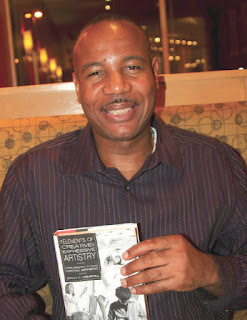
Brian K. Hemphill is author, artist, and artistic coach. His new book The Elements of Creative & Expressive Artistry: A Philosophy for Creating Everything Artistic will be released at the end of January 2011.

Comments
Post a Comment